
The People’s Emergency Briefing – why it matters
The People’s Emergency Briefing is being screened around the UK
The following piece uses extracts of a summary by Clare Binns following a screening at Chester’s Storyhouse which was attended by representatives of Transition Tattenhall.
You can read Clare’s full article here.
What is the briefing?
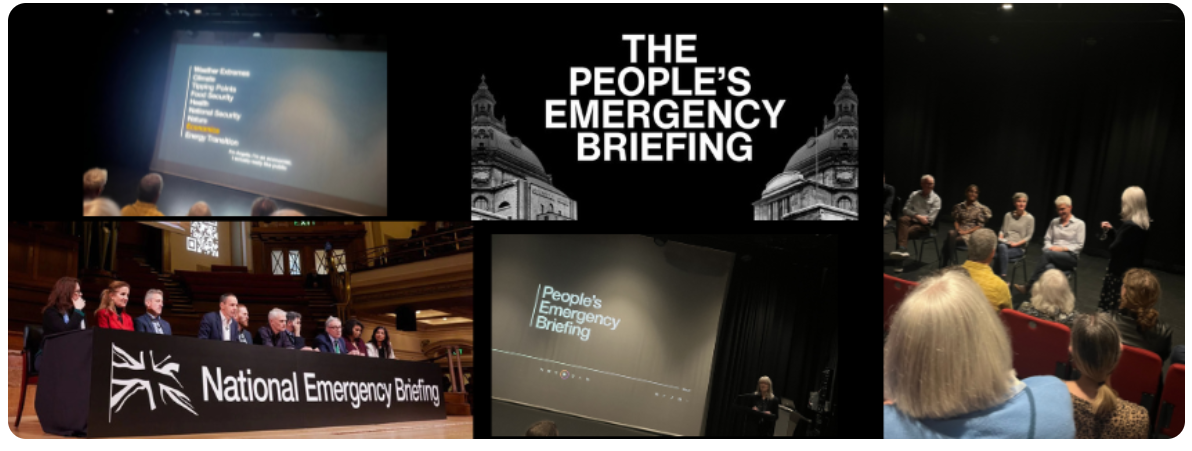
The film brings together insights from leading UK experts, originally presented to over 1,200 political, business and cultural leaders in Westminster on 27 November 2025.
Its aim is straightforward – to set out, clearly and on the public record, what climate and nature breakdown means for the UK: for our health, food systems, economy, weather and national security.
This 50-minute version makes that message accessible to communities across the country.
Why it stood out
What makes this different is how relatable it is.
It connects the climate crisis to everyday life, from rising food prices to flood risk and pressure on public services, showing how each of us will be affected if we don’t act now.
It’s honest, and at times uncomfortable. But it also does something important; it shows that we already know what to do, the research and modelling have already been done.
The solutions aren’t theoretical, they exist today:
- Shifting towards more plant-based diets
- Accelerating renewable energy
- Protecting and restoring nature
- Reducing waste and overconsumption
This isn’t about waiting for breakthroughs. It’s about scaling what works
Why this matters locally …
In Cheshire, we might not always feel on the frontline, but we are not insulated.
Flood risk, food costs, biodiversity loss and pressure on local services are already part of our reality..
Which raises an important question: what role can communities play?
Because while national leadership is critical, change also happens locally – through people, places and networks like Eco-communities.
What can we do?
A few simple starting points:
Start conversations Attend a screening. Talk about it with friends, neighbours and local groups.
Get involved locally Join community initiatives – from food growing to repair cafés, refill shops and nature projects.
Use your voice - Write to your MP to support calls for wider public engagement, including a national TV broadcast.
AND
Focus on what’s possible
Small actions, done collectively, to create a powerful positive tipping point toward the action required.
Final thought
One line that really stayed with me: “This is as good as it gets for a long time.”
Not because nothing can improve, but because the impacts already set in motion will shape the coming decades.
Which makes what we do next matter even more.
If you haven’t seen the briefing, I’d recommend it. Find a screening here.
But more importantly, don’t just watch it. Talk about it. Share it. Act on it.